


News
PALMA SOLUTIONS JSC
Electrical Safety in O&M: From compliance to corporate risk management
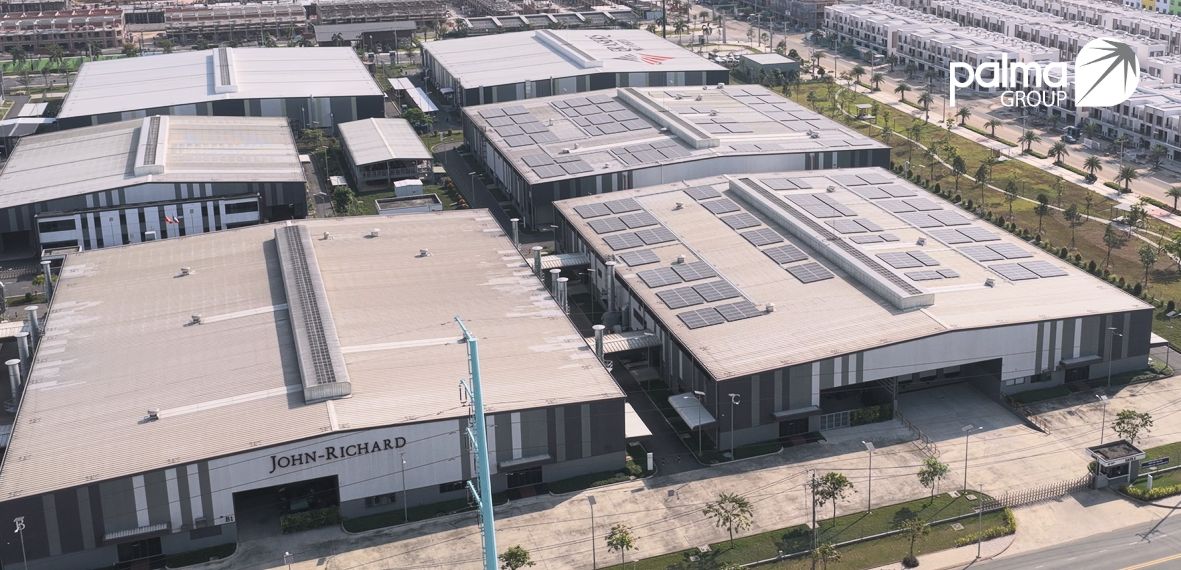
In the midst of the global energy transition, the installation of industrial-scale solar photovoltaic (PV) systems has grown significantly. However, a critical aspect often overlooked after the investment phase is Operation and Maintenance (O&M). In reality, electrical safety is not just a matter of legal compliance; it is a vital factor that determines financial efficiency and the safety of a company's infrastructure.
1. Specific Risks of Solar PV Systems
Unlike traditional alternating current (AC) systems, solar PV systems operate on high-voltage Direct Current (DC), typically ranging from 800V to 1500V. A key characteristic of DC is that it lacks a "zero-crossing" point, making it extremely difficult to extinguish an Arc Flash if a fault occurs.
Technical reports from the BRE National Solar Centre show that most solar fires start from minor technical errors, such as incompatible MC4 connectors, improper tightening (torque), or insulation wear caused by UV rays and humidity.
2. International Standards in Risk Management
To control these risks, the international technical community has established strict standards. Applying IEC 62446 is a prerequisite to ensure that insulation resistance tests, grounding continuity, and polarity checks are performed accurately.
Additionally, the NFPA 70E standard provides guidelines for electrical safety in the workplace. It emphasizes the importance of setting up protection boundaries and using appropriate Personal Protective Equipment (PPE) when working with energized components.
3. From Theory to Practice: The Role of Professional Experts
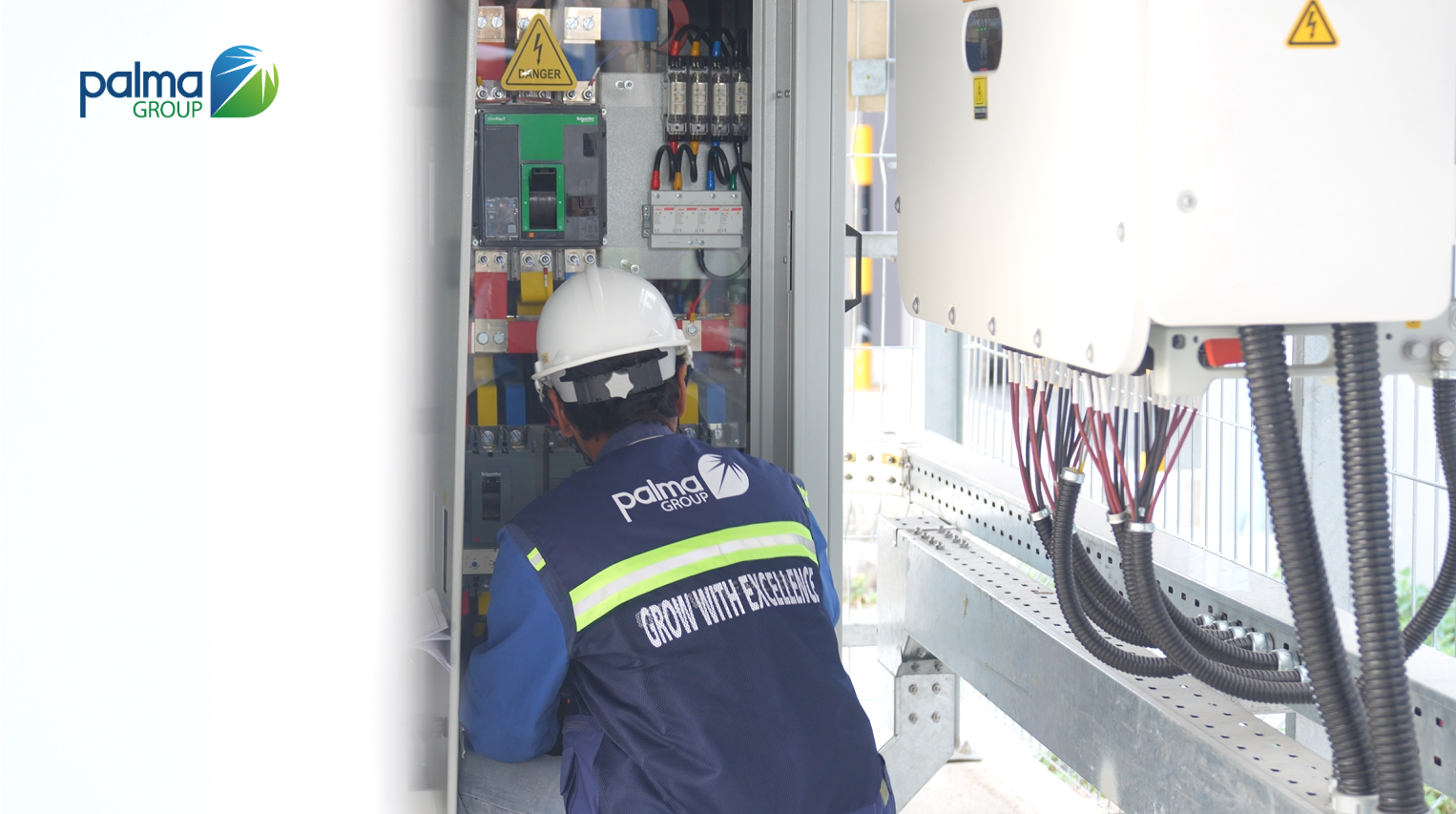
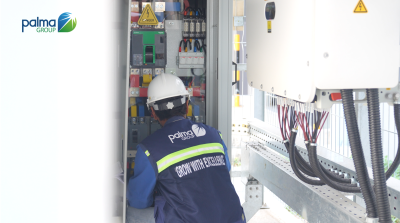
Maintaining a safe system requires an engineering team that possesses not only qualifications but also a systematic risk management mindset. Leading operators, such as Palma Group, are now integrating remote monitoring technologies and periodic thermal imaging inspections to detect abnormalities early.
The strict implementation of LOTO (Lockout/Tagout) procedures and JSA (Job Safety Analysis) before every maintenance session demonstrates professionalism in protecting client assets. This is how technical enterprises show their core values of dedication and responsibility toward the community.
4. Conclusion
Electrical safety in O&M should be viewed as an inseparable part of a business’s ESG (Environmental, Social, and Governance) strategy. A truly "green" system must be safe for people and durable over time. Investing in standardized O&M is the most direct way to protect profits and long-term corporate reputation.
11/03/2026 23:03:57
News other
_-08-01-2026-23-54-30.jpg "Why can the same solar technology deliver different performance across industrial plants?")

![[PALMA x NOVALAND] WORKSHOP ON MAINTENANCE AND SERVICING OF SOLAR LANDSCAPE LIGHT PLL-30 AT NOVA HILLS – MUI NE](https://www.palma.com.vn/upload/z3634653067260_15cb1f4d62b14f3a684fdf4ee9de4870_-11-08-2022-13-55-36.jpg "[PALMA x NOVALAND] WORKSHOP ON MAINTENANCE AND SERVICING OF SOLAR LANDSCAPE LIGHT PLL-30 AT NOVA HILLS – MUI NE")
_-06-02-2026-14-31-59.jpg "Understanding kWp and kWh: The First Step Toward Effective Solar Investment")
Search
Breaking news
_-24-10-2021-21-55-01.png "MicrosoftTeams-image (8)_-24-10-2021-21-55-01.png")
_-21-04-2022-13-38-01.png "PALMA SOLUTIONS JSC")
CONTACT US
MAP
Copyright © 2020 PALMA SOLUTIONS JSC
