


News
PALMA SOLUTIONS JSC
Implementing ESG & Green Energy: Where Should Businesses Begin?
As the global transition toward green development and Net Zero accelerates, sustainability is no longer driven solely by voluntary commitments. Increasingly, investors, financial institutions, and global supply chains are incorporating ESG criteria into their business evaluation processes, influencing everything from access to capital and market expansion to the selection of long-term business partners.
As a result, ESG is no longer an "added advantage." It is becoming a fundamental framework that enables businesses to strengthen their competitiveness and adapt to evolving market demands.
However, for many organizations, ESG is still perceived as a complex set of standards or simply a report that must be completed to satisfy customer and partner requirements. In reality, ESG does not begin with reporting—it begins with the way a business operates every day. Measuring data, optimizing resources, reducing emissions, and establishing transparent governance systems are the true foundations for implementing ESG effectively and sustainably.
An ESG strategy creates real value only when it is embedded into business operations, production activities, and corporate governance, rather than being managed as a standalone project. This is why more and more organizations are shifting their mindset from "meeting ESG requirements" to "managing the business through ESG principles."
Instead of asking, "How do we prepare an ESG report?", businesses should begin by asking, "What changes should we make to today's operations to create sustainable value for tomorrow?"
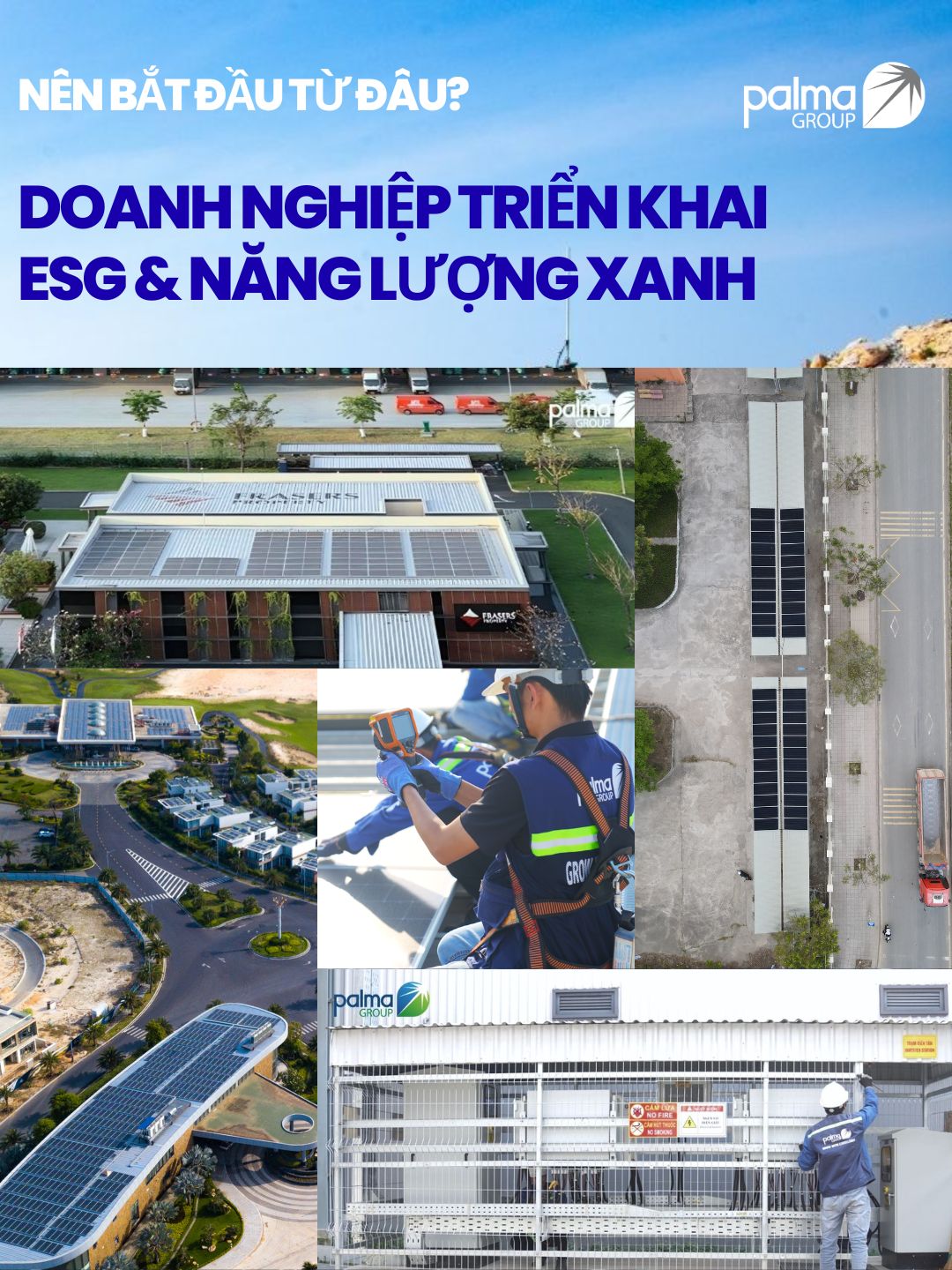
So, where should businesses begin to build an ESG strategy that aligns with their existing resources while delivering long-term value? Below are the fundamental steps organizations can consider.
Step 1: Understand Your Current Situation and Conduct a Greenhouse Gas Inventory
Every ESG strategy begins with data. Before setting sustainability targets or implementing emission reduction initiatives, businesses must first gain a clear understanding of their current operations and environmental impact.
One of the first and most important steps is conducting a Greenhouse Gas (GHG) Inventory—the process of measuring and quantifying greenhouse gas emissions generated by business activities. According to the GHG Protocol, emissions are categorized into three scopes:
- Scope 1: Direct emissions from sources owned or controlled by the company, such as fuel used in boilers, generators, or company-owned vehicles.
- Scope 2: Indirect emissions resulting from purchased electricity, steam, heating, or cooling consumed by the organization.
- Scope 3: All other indirect emissions across the value chain, including transportation, raw materials, supplier activities, and end-of-life product treatment.
Conducting a GHG inventory not only enables businesses to meet ESG reporting requirements but also provides the foundation for developing an emissions reduction roadmap and progressing toward Net Zero.
For example, once a manufacturing facility identifies its electricity consumption and Scope 2 emissions, it can immediately evaluate its potential for emission reduction by investing in a Solar Photovoltaic (Solar PV) system, integrating a Battery Energy Storage System (BESS), and implementing an Energy Management System (EMS). These data enable businesses not only to identify opportunities for electricity cost savings but also to quantify CO₂ emission reductions for ESG reporting and broader sustainability objectives.
Establishing a baseline from emissions and energy consumption data provides the foundation for tracking progress, evaluating the effectiveness of implemented solutions, and continuously improving ESG performance throughout the organization's sustainability journey.
Step 2: Establish Appropriate ESG Goals and a Net Zero Roadmap
Once baseline data on energy consumption and greenhouse gas emissions have been established, businesses should define ESG objectives that align with their scale, industry, and long-term development strategy.
Rather than setting overly ambitious goals from the outset, organizations should develop a phased roadmap with measurable and trackable performance indicators. This approach makes ESG implementation more practical while creating a foundation for continuous improvement.
In practice, businesses should pursue two categories of objectives simultaneously:
- Short-term objectives: Focus on measurable improvements that can be achieved annually or within defined implementation phases, such as reducing electricity consumption, improving energy efficiency, increasing the share of renewable energy, or lowering CO₂ emissions from production activities.
- Long-term objectives: Develop a Net Zero roadmap aligned with the company's strategic direction and the global green transition. This involves progressively reducing greenhouse gas emissions through operational optimization, energy transition, and the adoption of innovative technologies, ultimately achieving net-zero emissions in line with national and international commitments.
Simply put, ESG represents a company's overall sustainability strategy, while Net Zero is one of the key objectives under the Environmental pillar of ESG. These two concepts complement each other and should be developed within a single strategic roadmap rather than implemented independently.
When objectives are clearly defined and linked to measurable indicators, businesses can more effectively evaluate the performance of implemented initiatives while demonstrating tangible improvements to customers, business partners, investors, and financial institutions.
Step 3: Integrate ESG into Daily Operations
Once emission baselines have been established and ESG objectives defined, the next step is integrating those objectives into day-to-day business operations. This is the stage where organizations move beyond commitments and begin translating their Net Zero roadmap into measurable actions that create real business value.
For many organizations - particularly manufacturing enterprises - investing in green energy has become one of the most effective ways to optimize operating costs while reducing greenhouse gas emissions. In this context:
- Solar Photovoltaic (Solar PV) systems generate clean electricity from solar energy, reducing dependence on grid electricity.
- Battery Energy Storage Systems (BESS) store excess electricity generated by renewable sources and make it available during periods of high demand or reduced generation.
- Energy Management Systems (EMS) monitor, analyze, and optimize energy consumption in real time, enabling more efficient energy management.
When integrated as a unified solution, these technologies help businesses reduce reliance on the electrical grid, increase the utilization of renewable energy, and improve operational efficiency. For many manufacturing facilities with significant electricity demand, installing an appropriately designed Solar PV system can reduce Scope 2 emissions by approximately 40–60%, depending on system capacity, operating conditions, and actual electricity consumption.
More importantly, every kilowatt-hour of solar electricity generated, stored, and efficiently utilized can be translated into measurable data on energy savings and CO₂ emission reductions. These data provide the foundation for tracking ESG performance, preparing sustainability reports, and demonstrating measurable results through transparent and verifiable indicators.
In other words, investing in green energy is not merely a technical or financial decision - it is a practical way for businesses to transform ESG and Net Zero commitments into measurable actions embedded within their daily operations.
Example: A manufacturing company with high daytime electricity consumption can significantly reduce electricity purchased from the grid by implementing an integrated Solar PV + BESS + EMS solution. As a result, the company can lower its Scope 2 emissions while generating reliable energy consumption and emissions data to support ESG reporting and monitor progress toward its Net Zero objectives.
Step 4: Build a Robust Data Management System and Measure Performance Continuously
One of the fundamental principles of ESG is the ability to demonstrate results through reliable data. Businesses should establish a systematic process for collecting, managing, and regularly updating environmental, social, and governance (ESG) data to ensure that every objective and outcome can be monitored, measured, and verified.
These data not only support ESG reporting and sustainability reporting but also enable businesses to evaluate the effectiveness of implemented initiatives, identify opportunities to optimize operating costs, and improve overall operational performance. When ESG data are standardized and transparent, organizations are better positioned to meet the increasingly rigorous expectations of customers, investors, financial institutions, and global supply chains.
More importantly, accurate ESG data are becoming the foundation for accessing new business opportunities. They provide the basis for participating in Green Finance initiatives, meeting the requirements of internationally recognized certifications and sustainability standards, and preparing for participation in the carbon market as carbon credit trading mechanisms continue to evolve.
In particular, conducting a Greenhouse Gas (GHG) Inventory and monitoring emission reductions achieved through solutions such as Solar PV, Battery Energy Storage Systems (BESS), and Energy Management Systems (EMS) enable businesses to establish transparent and verifiable emissions data. This serves as an important prerequisite for assessing the potential to generate carbon credits in the future while strengthening the company's position in emission reduction mechanisms and green transition incentive programs.
In other words, ESG data are not merely a compliance or reporting requirement - they are a strategic business asset that enhances competitiveness, expands access to green financing opportunities, and creates long-term sustainable economic value.
Step 5: Drive Continuous Improvement
ESG is not a goal that can be achieved through a single project or within one year of implementation. It is a continuous improvement journey that requires businesses to regularly evaluate performance, review areas for improvement, and refine their strategies to support sustainability objectives at every stage of development.
This approach is widely adopted by leading organizations around the world through the Plan – Do – Check – Act (PDCA) cycle, ensuring that ESG becomes an integral part of corporate governance rather than a periodic reporting exercise.
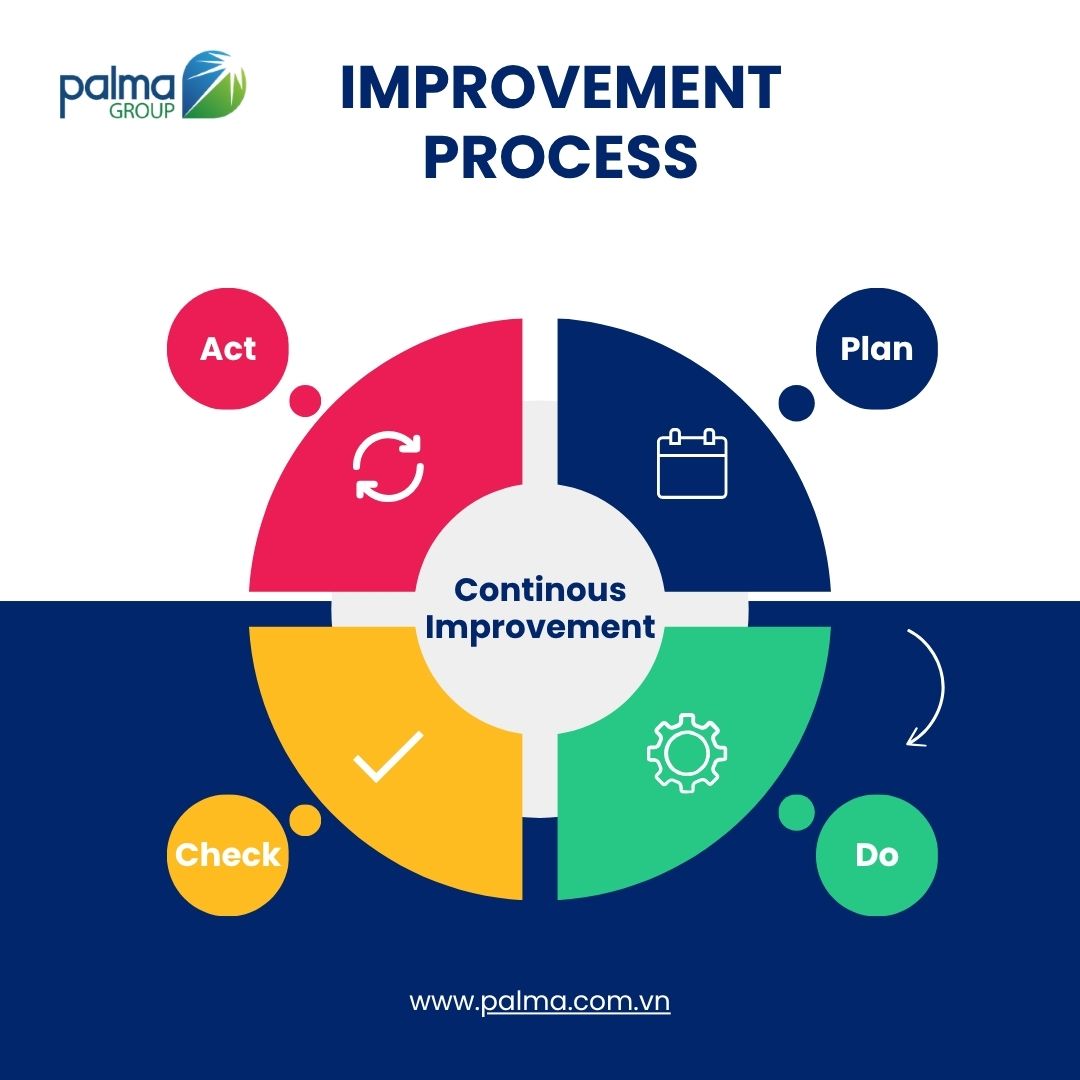
As global ESG standards, sustainability reporting requirements, and Net Zero-related regulations continue to evolve, businesses must continuously adapt and improve to maintain compliance while strengthening their competitive advantage. Emerging frameworks such as the Corporate Sustainability Reporting Directive (CSRD) of the European Union, the International Sustainability Standards Board (ISSB) Sustainability Disclosure Standards, and Vietnam's Nationally Determined Contribution (NDC) roadmap all demonstrate that sustainability governance is becoming increasingly standardized, transparent, and globally aligned.
Therefore, rather than viewing ESG as a task to be completed, businesses should recognize it as a long-term management approach. Continuously improving data quality, optimizing operations, and strengthening governance capabilities will not only help organizations meet evolving market expectations but also establish a solid foundation for achieving their Net Zero ambitions and long-term sustainable growth.
Start Your ESG Journey with Palma
Every business has its own ESG journey, shaped by its industry, operational scale, and long-term development objectives. The key is not to implement everything at once, but to begin with practical solutions that align with your organization's priorities and deliver measurable results.
Palma partners with businesses throughout their ESG journey by providing comprehensive solutions, including:
- ESG strategy consulting and the development of sustainability roadmaps.
- Energy audits and Greenhouse Gas (GHG) Inventory services.
- Implementation of Solar PV, Battery Energy Storage Systems (BESS), and Energy Management Systems (EMS) to optimize operations and reduce CO₂ emissions.
- Advisory services on carbon credits and other mechanisms that support businesses in achieving their Net Zero objectives.
The journey toward a greener future does not begin with a major transformation—it begins with making the right decision today.
If your business is looking for a clear, measurable ESG roadmap aligned with its sustainable development goals, Palma's team of experts is ready to support you every step of the way—from assessing your current situation and developing a tailored strategy to implementing solutions and continuously optimizing long-term performance.
26/06/2026 13:58:42
News other
_-08-01-2026-23-54-30.jpg "Why can the same solar technology deliver different performance across industrial plants?")


![[PALMA x NOVALAND] WORKSHOP ON MAINTENANCE AND SERVICING OF SOLAR LANDSCAPE LIGHT PLL-30 AT NOVA HILLS – MUI NE](https://www.palma.com.vn/upload/z3634653067260_15cb1f4d62b14f3a684fdf4ee9de4870_-11-08-2022-13-55-36.jpg "[PALMA x NOVALAND] WORKSHOP ON MAINTENANCE AND SERVICING OF SOLAR LANDSCAPE LIGHT PLL-30 AT NOVA HILLS – MUI NE")
_-06-02-2026-14-31-59.jpg "Understanding kWp and kWh: The First Step Toward Effective Solar Investment")
Search
Breaking news
_-24-10-2021-21-55-01.png "MicrosoftTeams-image (8)_-24-10-2021-21-55-01.png")
_-21-04-2022-13-38-01.png "PALMA SOLUTIONS JSC")
CONTACT US
MAP
Copyright © 2020 PALMA SOLUTIONS JSC
